
Overview
Consumers of a hair care product alleged that using it caused scalp damage resulting in hair loss. As the matter moved forward and developed into a class action, defense counsel needed a consistent, defensible way to evaluate each claimant’s account before depositions and settlement discussions.
The Challenge
Hair and scalp conditions can have many possible causes. Medical history, medications, stress, hormonal changes, using multiple products, and major life events can all play a role, and medical records alone rarely capture the full picture. A claimant’s own posts about their hair, their routines, and their life around the time of product use could show whether a claim matched the timeline being alleged.
Reviewing claimants one by one, without a shared scope and method, risked inconsistent results that would be hard to defend if challenged later in the matter.
The Approach
SMI Aware worked with defense counsel to develop a scope of work built around the claims in the matter. Using a customized keyword set of search terms, analysts searched publicly available social media and online content for each claimant, including secondary and alias accounts. SMI Aware’s analysts never use deception, send friend requests, or access private accounts to gather information.
Analyst search focused on:
- References to the product in question, including timestamps tied to product use
- Current or past complaints about the claimant’s hair or scalp
- Other treatments such as hair extensions or hair coloring, and use of competitor products
- Disclosed medical conditions or illnesses
- Major life changes, such as a new pregnancy, the loss of a job or a loved one, or other stressful events
- Images of the claimant, especially those showing their hair
Every finding was reviewed by an expert analyst and preserved with source code to secure the digital chain of custody.
The Results
Across 30 claimants, SMI Aware’s analysts confirmed 133 social media profiles. Of the reports produced, 83% contained at least one instance of scope-related content.

Case-relevant findings were collected, preserved, and secured. Defense counsel used these findings in depositions to vet the legitimacy of each claim. The matter was ultimately resolved through tiered payout settlements totaling $5.2 million.
Findings in Practice
The examples below represent the kinds of findings SMI Aware’s analysts surfaced during this matter. Details have been altered to protect privacy.
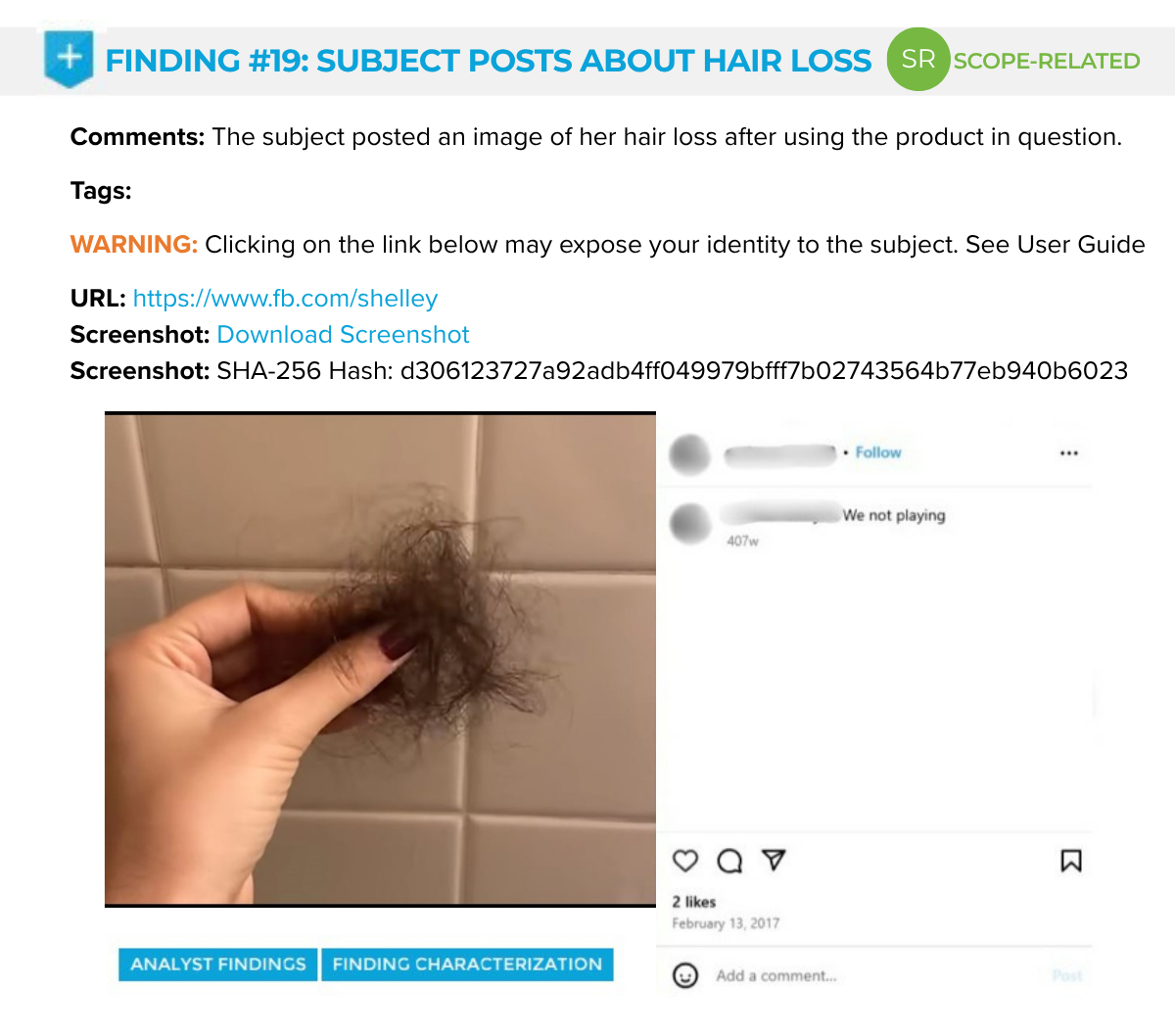
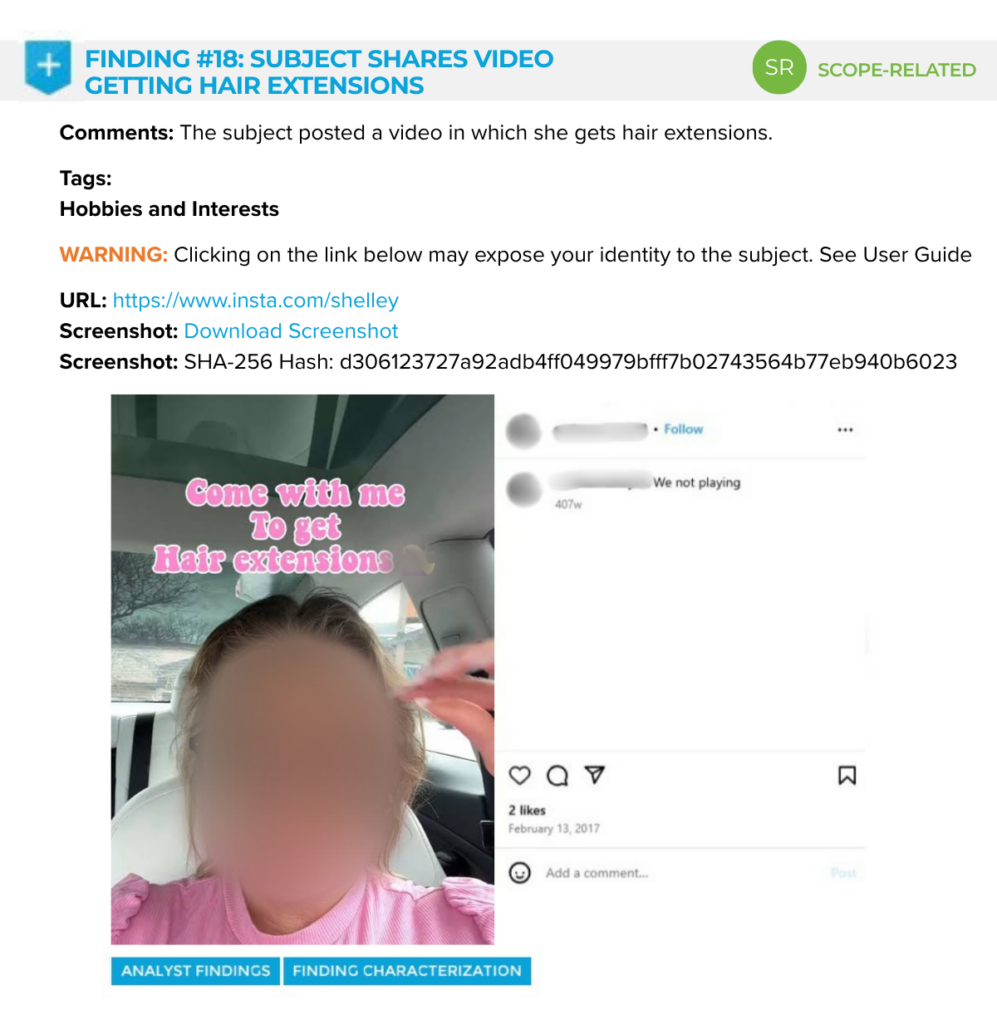
Representative findings. A claimant alleging hair loss after product use posts an image of the hair loss. Around the same time, she shares a video of herself getting hair extensions. Each finding is documented with analyst comments, a URL, a screenshot, and a SHA-256 hash, then preserved with source code for evidentiary use.
Why It Matters
When a claimed injury could have more than one explanation, timing and context carry real weight. Consistent, analyst-led discovery gave defense counsel a documented, claimant-by-claimant record to test each account against. That record supported a settlement structure that reflected differences between claims rather than treating every claimant the same.
SMI Aware provides analyst-led social media discovery purpose-built for legal teams handling product liability, class action, and mass tort matters. To learn more about how a defensible social media discovery process could apply to your current product liability litigation, contact our team.