
The Challenge
A commercial transportation insurance carrier, referred to here as the Carrier, was managing a bodily injury claim stemming from an automobile accident. The claimant, referred to here as the Claimant, alleged a physical injury that limited daily function and mobility. The claim was valued at $300,000.
Before finalizing a settlement position, the Carrier engaged SMI Aware to determine whether the Claimant’s public online presence reflected the same level of physical limitation described in the claim.
The Scope
SMI Aware’s analysts were asked to search for any evidence of the Claimant’s physical condition, daily activities, and overall lifestyle relevant to the claimed injury. Particular focus was placed on physical activity, mobility, exercise routines, recreational activities, and travel, indicators that speak directly to functional capability rather than stated limitation. Analysts were also asked to identify any direct statements about the injury itself: recovery status, medical conditions, physical limitations, or pain complaints made by the Claimant.
The Findings
SMI Aware’s report surfaced a body of evidence that stood in direct contrast to the claimed injury.
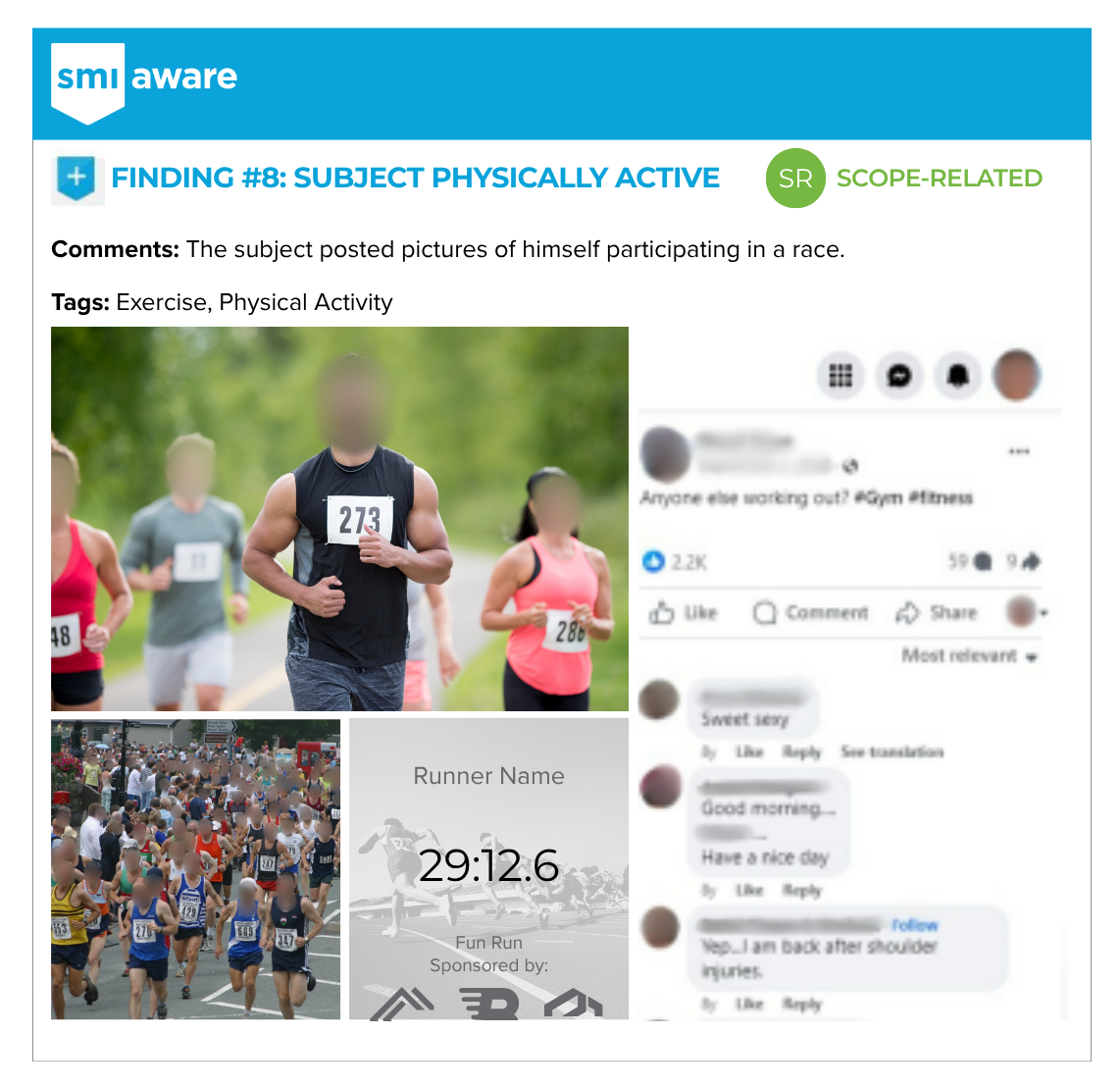
Public posts showed the Claimant completing a race and working out at the gym, with photos documenting both. Additional posts placed the Claimant engaging in outdoor recreational activities, the kind that require a meaningful degree of balance, core strength, and physical endurance. A chiropractor visit appeared in the Claimant’s activity, alongside a public listing offering handyman services for hire, a trade that assumes physical capability as a baseline qualification.
The report also surfaced public arrest and traffic records unrelated to the claim itself but relevant to the Claimant’s credibility as a witness. Charges and violations included possession of illegal substances and paraphernalia, moving violations, and suspended licenses and registrations, a pattern that painted a clear picture of the Claimant’s reliability as a source of testimony.
Each finding was documented with the capture date, source code, and analyst summary, preserving a defensible chain of custody consistent with authentication standards under Federal Rule of Evidence 901(b).
The Result
Armed with this report, the Carrier revised its position on the claim. The valuation moved from $300,000 to $225,000, a reduction of $75,000 supported entirely by evidence the Subject had made public.
The result demonstrated a clear return on the investigative spend. The savings generated from this single report supported the Carrier’s continued use of social media discovery as a standard part of its claims operations going forward.
Why It Matters
Claimed injuries are often described in narrative terms: pain, limitation, an inability to return to normal life. Public social media activity tells a different kind of story, one built from dates, images, and firsthand posts rather than self-report. When those two accounts diverge, the gap becomes material to claim value.
This case illustrates a pattern SMI Aware sees often in bodily injury and disability claims: the most persuasive evidence of functional capability rarely comes from a formal deposition. It comes from a race finisher photo, a gym check-in, or a weekend outdoors, shared publicly, well before any claim was ever filed.
SMI Aware’s social media discovery reports give insurance carriers and legal teams a defensible, methodical way to test the claims in front of them against the evidence already available. To learn more about how SMI Aware supports claims and litigation teams, contact us today.