Why Screenshots Fall Short in Social Media Discovery
Social media evidence carries real weight in litigation, and most attorneys recognize it when they see it. What is discussed less often is how that evidence is captured in the first place, and whether the collection method will hold up when the matter moves into deposition, motion practice, or trial.
For many firms, the default approach is still a screenshot. A staff member opens the post, captures an image of the screen, and saves it to a case folder. It is fast, familiar, and free. It is also, by itself, one of the weakest forms of evidence a legal team can rely on in 2026.
What a Screenshot Actually Preserves
A screenshot preserves the appearance of a post at the moment the image was captured. That is the full extent of what it does.
It does not preserve the URL, the post’s permanent identifier on the platform, the account’s history, the platform-reported timestamp, the visibility settings at the time of capture, the comments and reactions that may have been just out of frame, or the other data points that allow a finder of fact to confirm that the post is what it appears to be.
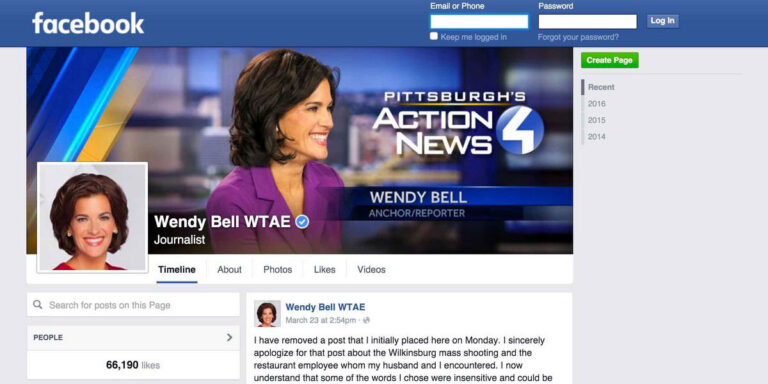
In practice, that limitation surfaces quickly. A screenshot of a Facebook post may show a display name. It does not show whether that display name has changed since the post was published, whether the underlying account URL matches the person believed to have authored it, or whether the account was even active on the date in question.
A screenshot of a LinkedIn comment may show the comment itself. It does not show the broader thread the comment was responding to, whether the parent post has since been edited, or what surrounding context may be needed to understand the statement.
Questions like these arise in depositions, motions practice, and authentication disputes. They are reasonable questions, and a screenshot alone cannot answer them.
The Authentication Problem Has Changed
For much of the social media era, the primary risk with a screenshot was incompleteness. A screenshot was generally assumed to be what it appeared to be. The harder question was whether it told the whole story.
That is no longer the only risk.
Generative tools have made fabricated social posts easy to produce. Free web utilities can mock up a convincing tweet, Instagram caption, or Facebook comment in seconds, using platform-accurate fonts, spacing, and interface details. AI image tools can produce realistic profile screenshots on demand. The technical bar to forge a social media image is now extremely low, and those forgeries are becoming harder to identify by eye.
The response is not to treat every screenshot as suspect. The response is to collect social media evidence in a way that does not rely on the image alone.
A properly preserved post carries verifiable data alongside the visual record: the live URL, platform identifiers, capture-time metadata, source code, and a documented chain of custody. When those elements are present, the visual rendering is supported by the underlying record. When they are absent, the image is being asked to do work it was never designed to do.
What Disappears, and Why Timing Matters
We are sometimes asked whether SMI Aware recovers deleted content. We do not. Our work is the careful collection of what is publicly available online, captured from live platforms as a member of the public would see it.
That distinction is important, and it points to one of the strongest arguments for professional collection.
Public social media content is not static. Posts get edited. Captions get rewritten. Profiles get renamed. Accounts get set to private. Platforms remove content under their own policies. A post that is visible and relevant today may be altered or unavailable next month, and a screenshot taken after the change will not show what was originally there.
This is why the timing of collection matters as much as the method.
Capturing public content at the moment it becomes relevant, with supporting metadata and chain of custody, preserves a version of the record that can be referenced reliably even if the post later changes or disappears. Waiting to collect, or relying on staff to capture screenshots when time allows, often means accepting whatever version of the content happens to remain when someone finally sits down to preserve it.
Defensibility Starts Before the Search Does
Defensibility is not something added to social media evidence at the end of a project. It is built in from the moment a request is received.
The work that happens before any platform is searched often determines whether the resulting evidence can be explained and defended later.
That work begins with scope. A defensible search is a tailored search, aligned to a specific matter, with parameters defined in advance. The subject, platforms, relevant time period, known identifiers, and type of content being sought are documented at intake. This allows the resulting findings to be explained later. If opposing counsel asks what was searched and why, there is a record to answer that question.
It continues with methodology. Each search is conducted by a trained analyst following a standardized process, not by software running unattended. The methodology is consistent across matters, which means findings produced for one case can be defended using the same disciplined process that produced findings in another. This consistency is part of what makes the work auditable.
It carries through to documentation. Every step of the search, from the parameters set at intake to the platforms reviewed and the findings authenticated, is recorded in a way that supports chain of custody. This is the discipline that helps establish that the information presented is what it purports to be, which is the underlying standard of Federal Rule of Evidence 901(b).
A screenshot collected in the middle of a case carries none of this context. There is no documented scope, no recorded methodology, and no audit trail leading from a defined request to a verified finding. Even when the screenshot is accurate, it cannot be defended in the same way an authenticated finding can.
Defensibility a Court Can Read
There is a temptation, when the conversation turns to defensibility, to assume that more raw data is always better.
It is true that source code, hash values, metadata, and platform identifiers are important elements of an authenticated record. It is also true that, on their own, they are not designed to be read by a judge, jury, or witness.
A page of source code is not persuasive evidence. A hash value does not communicate what someone posted. A data export stripped of its formatting does not show what the public saw when they encountered the content. The underlying data matters because it can be verified, but verification is only useful if the people deciding the case can also understand what is in front of them.
This is the gap that has defined social media discovery for years, and it is the gap SMI Aware was purpose-built to close.
Our deliverables pair defensible collection elements with a visual presentation a court can actually use. Every finding includes an image of the post or profile as it was captured, the live URL of the content, and the underlying source code that supports authentication and helps maintain the digital chain of custody.
Attorneys can present the image to a witness or jury. They can point to the URL when authenticity is questioned. They can produce the source code when the record requires it.
Each piece does work the others cannot. Together, they form a record that is both readable and defensible, which is what social media evidence requires.
The Cost of Getting It Wrong
The expense of inadequate screenshot collection does not appear at the moment of collection. It appears later, usually when there is no time left to fix it.
It appears in a deposition when a witness disputes authorship and there is no URL to point to. It appears when opposing counsel argues that the post has been altered and there is no metadata to rebut the claim. It appears when a motion to exclude turns on the authentication of images that were never preserved properly in the first place.
Evidence that cannot be authenticated is evidence that may be excluded. And exclusions at the wrong moment can reshape the posture of a case.
If a piece of social media content is important enough to use as evidence, it is important enough to collect with the rigor evidence requires.
SMI Aware helps legal teams get social media discovery right from the start, with analyst-led research, defensible collection, and reporting designed for litigation. To learn how our team can help you identify, preserve, and document public social media evidence, contact SMI Aware.